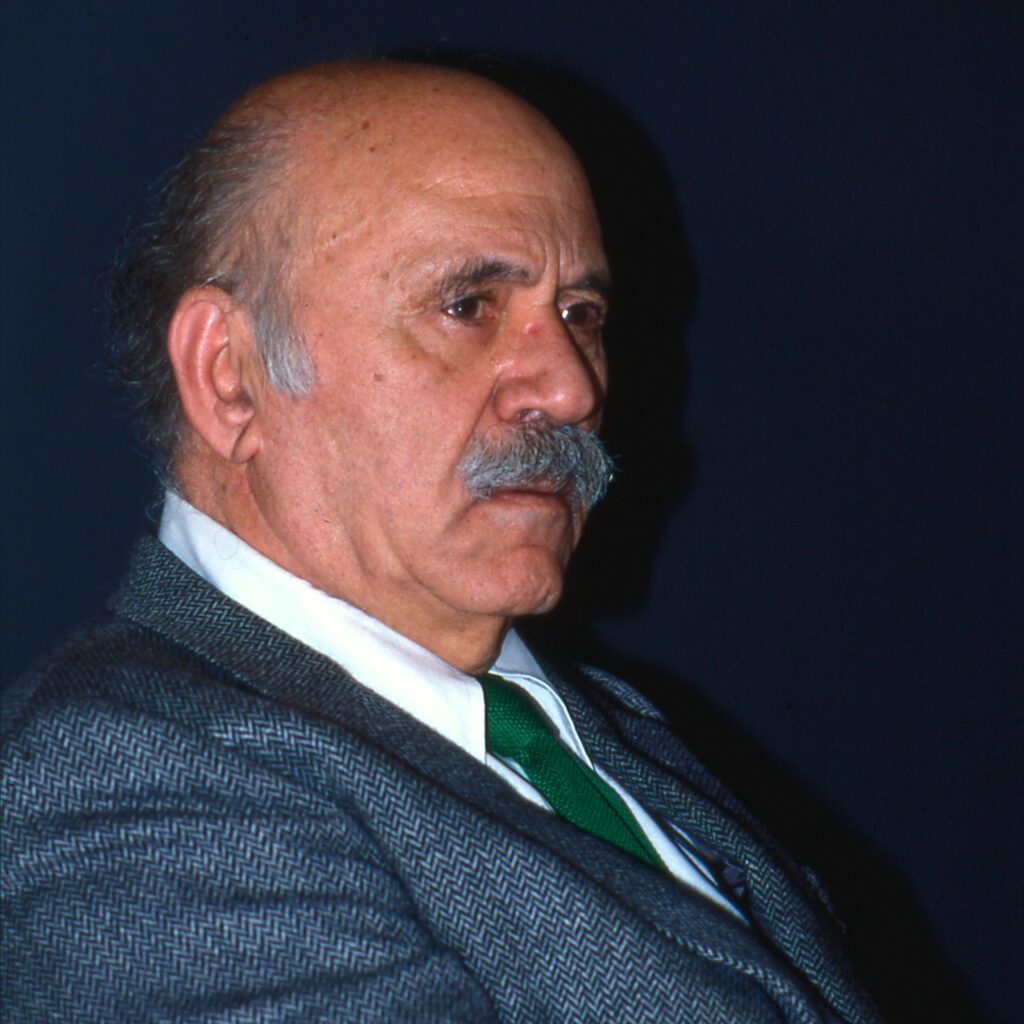
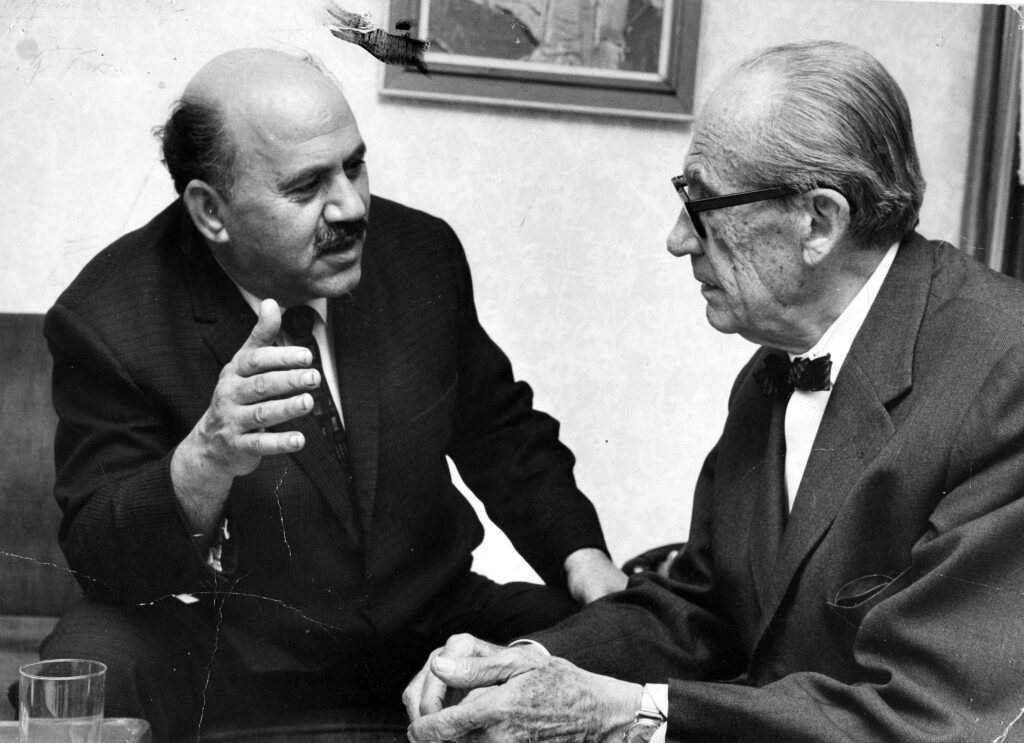
Mohamed Makiya (1914-2015)
Dr. Makiya was born in Baghdad and educated in England, receiving his BArch at Liverpool School of Architecture and a diploma in civic planning from Liverpool University in 1941 and 1942, respectively. He completed his studies at Kings College, Cambridge, earning his PhD in 1946. He returned to Baghdad that same year and established Makiya Associates, an architectural and planning consultancy practice. During the 1950s he designed houses and commercial buildings and became increasingly aware of the heritage of Iraqi architecture.
Dr. Makiya was one of the original founders of the Department of Architecture at the College of Engineering, Baghdad University, in 1959. He remained head of the department until 1968. During subsequent years, Makiya Associates offices were established in Bahrain, Oman, London, Kuwait, Doha, Abu Dhabi, and Dubai.
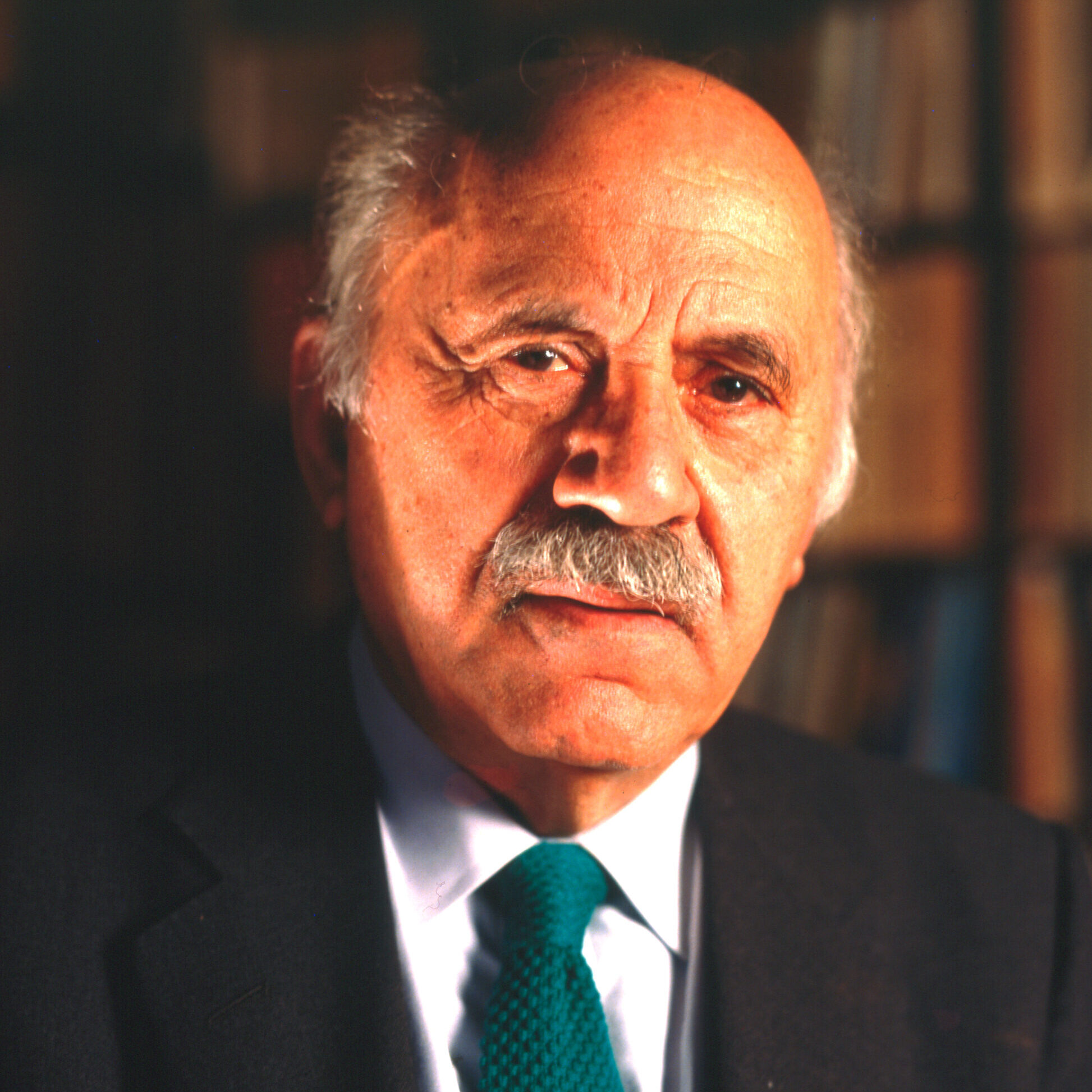
The works and ideas of Mohamed Makiya and his firm have been investigated in numerous books and articles, and examined and explored in conferences and exhibitions, including an international conference on Baghdad architectural heritage held in early 2013 at the University of Baghdad. The conference was part of the events of “Baghdad, Arab Capital of Culture for the Year 2013”, sponsored through a partnership between the University of Baghdad, Ifpo (the French Institute of the Near East), and the UNESCO Office for Iraq.
Makiya’s contributions to the fields of architecture and urbanism and, in particular, his sophisticated incorporation of traditional forms into modern architecture, cannot be overstated. His work embodies ideas of urban conservation, regionalism in form, and continuity of architectural heritage; ideas which continue to younger generations of architects throughout the Middle East.
Dr Mohamed Saleh Makiya was awarded the Tamayouz Lifetime Achievement Award in architecture. The announcement took place during the 2nd annual Tamayouz Excellence ceremony hosted by the University of Kurdistan Hewler in Erbil
Mohamed Makiya Projects
• Al-Khulafa Mosque (1960–63).
• Rafidain Bank, Basra (1970).
• Sheikh Mubarak Building, Bahrain (1973).
• International Hilton Hotel, Dubai (1974).
• Siddique Mosque, Doha (1978).
• Al-Andalus housing complex, Doha (1983).
• Kuwait State Mosque (1978-1984).
• Headquarters for the Regional Arab Organisers, Kuwait (1982–87).
• Headquarters of the League of Arab States, Tunis (1983).
• Great Mosque, Oman (1995-2002).
• Al Baharna Hotel.
• Bab Al-Mitha’b.
• Baghdad City Planning.
• Baghdad State Mosque 1983.
• Bayt Greiza.
• BushirThe University of Baghdad 1960.
• Embassy of Qatar & Ambassador’s Residence in Baghdad 1980.
• Embassy of United Arab Emirates in Oman 1970.
• Gateway to Isa Town in Bahrain.
• Jawad Al-Arrayed Residence.
• Kufa University 1967.
• Mosul Museum of Antiquities 1972.
• Pahlavi National Library.
• Public Library in Karbala.
• Rome Mosque and Cultural Centre.
• Sheikh Mubarak Building, Bahrain.
Embassy of United Arab Emirates in Oman
Great Mosque, Oman
Baghdad State Mosque
Kufa University